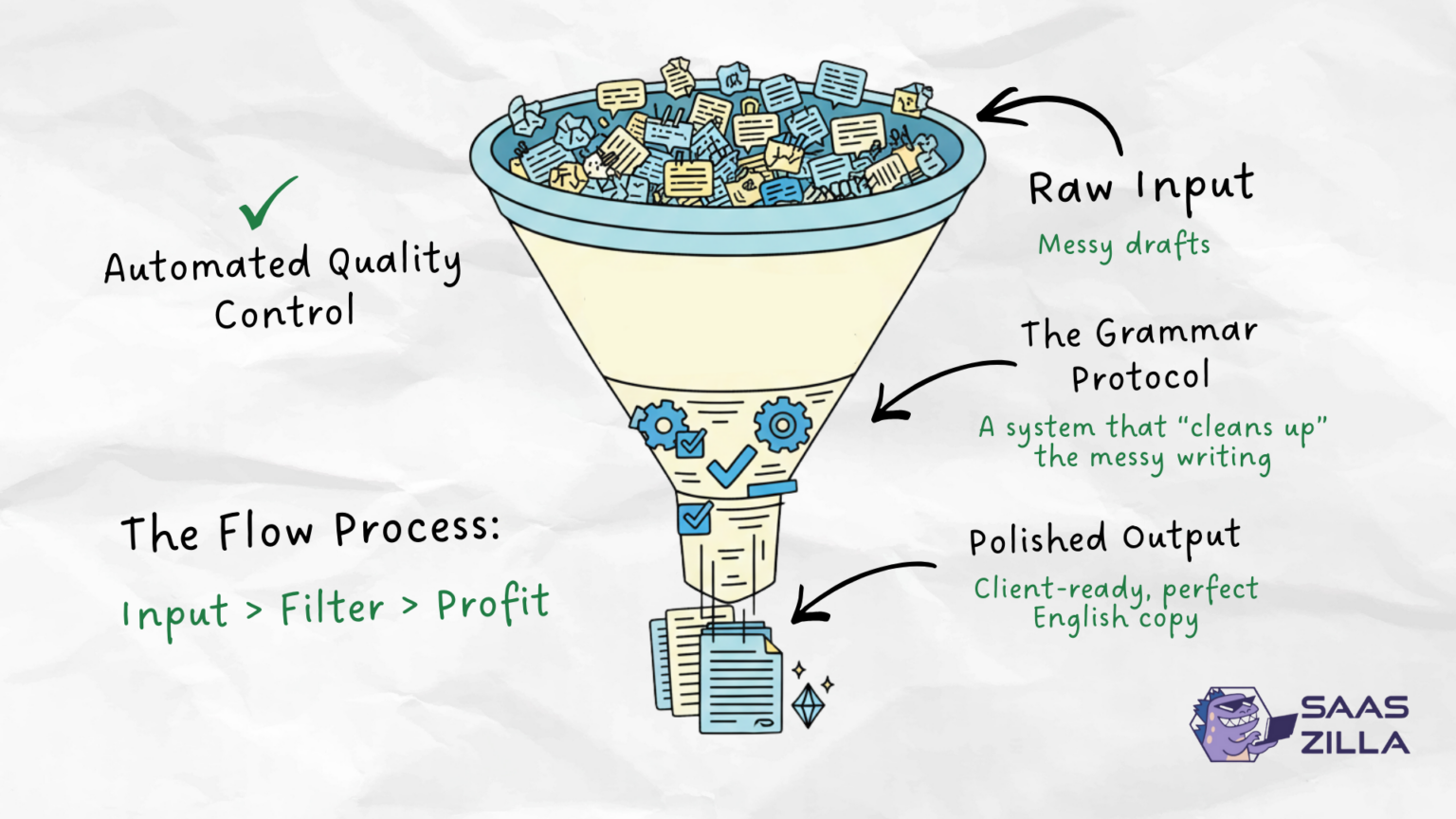
Think of it like a factory line.
Messy input goes in the top.
The protocol filters it.
Clean, professional, trust-building copy comes out the bottom.
You don’t have to be on the line.
You just have to install the machine.
The “Set and Forget” Quality Control System
Here’s how it works:
Step 1: You get access to the system.
Step 2: You send the login to every writer, VA, and junior marketer on your team.
Step 3: You tell them: “Complete this before you write another word for a client.”
Step 4: You stop editing their work.
That’s it.
No ongoing management. No monthly check-ins. No “refresher” courses.
The system standardizes their output—permanently.
Just like McDonald’s produces the same burger whether you’re in Tokyo or Toledo, your agency produces the same “Perfect English” regardless of who’s typing.
The “Business English” Checklist
This isn’t a college grammar course.
We stripped out the academic nonsense—the subjunctive mood, the pluperfect tense, the rules that only matter if you’re writing Victorian poetry.
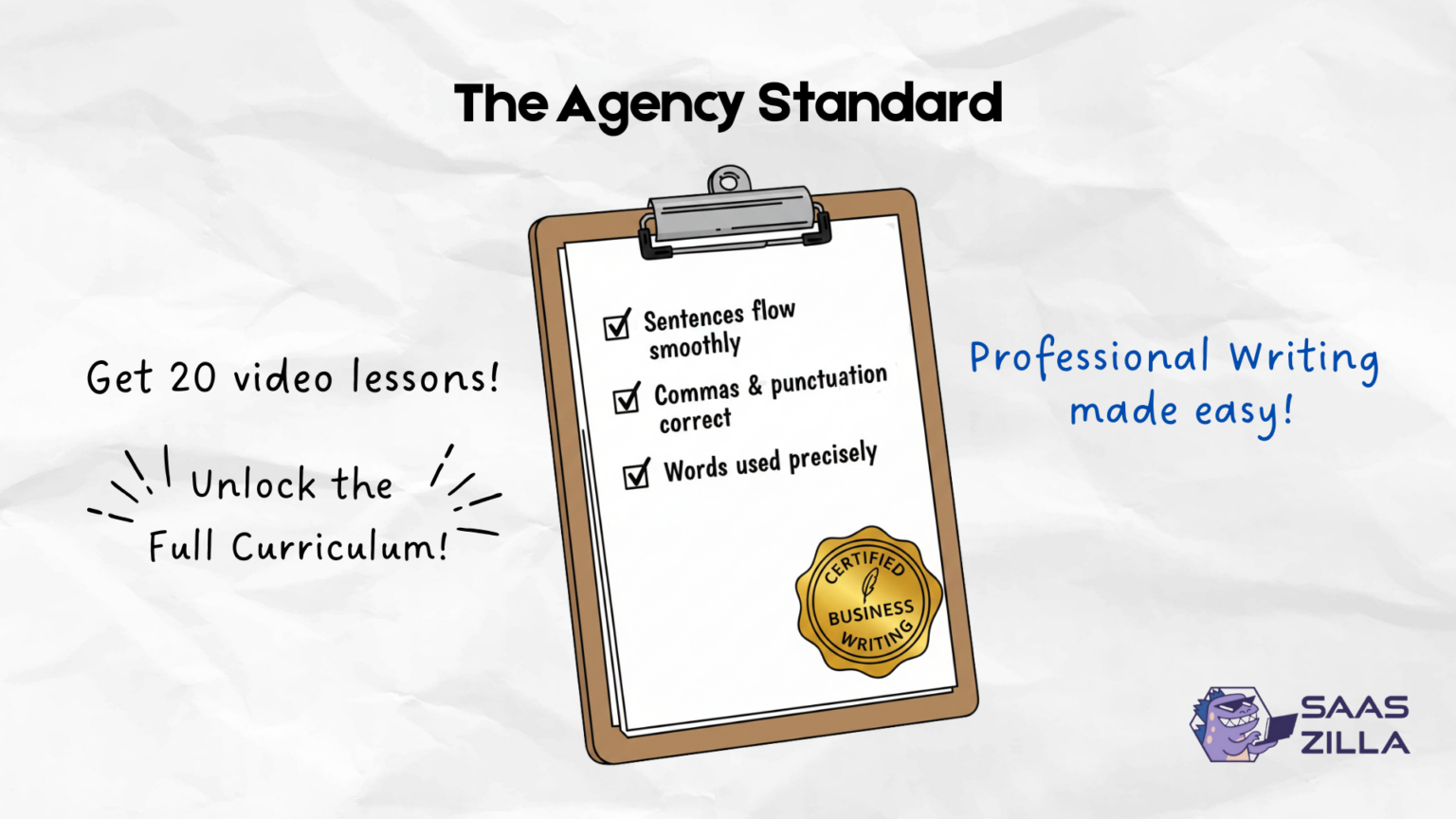
What’s left? The 20 errors that cost you money.
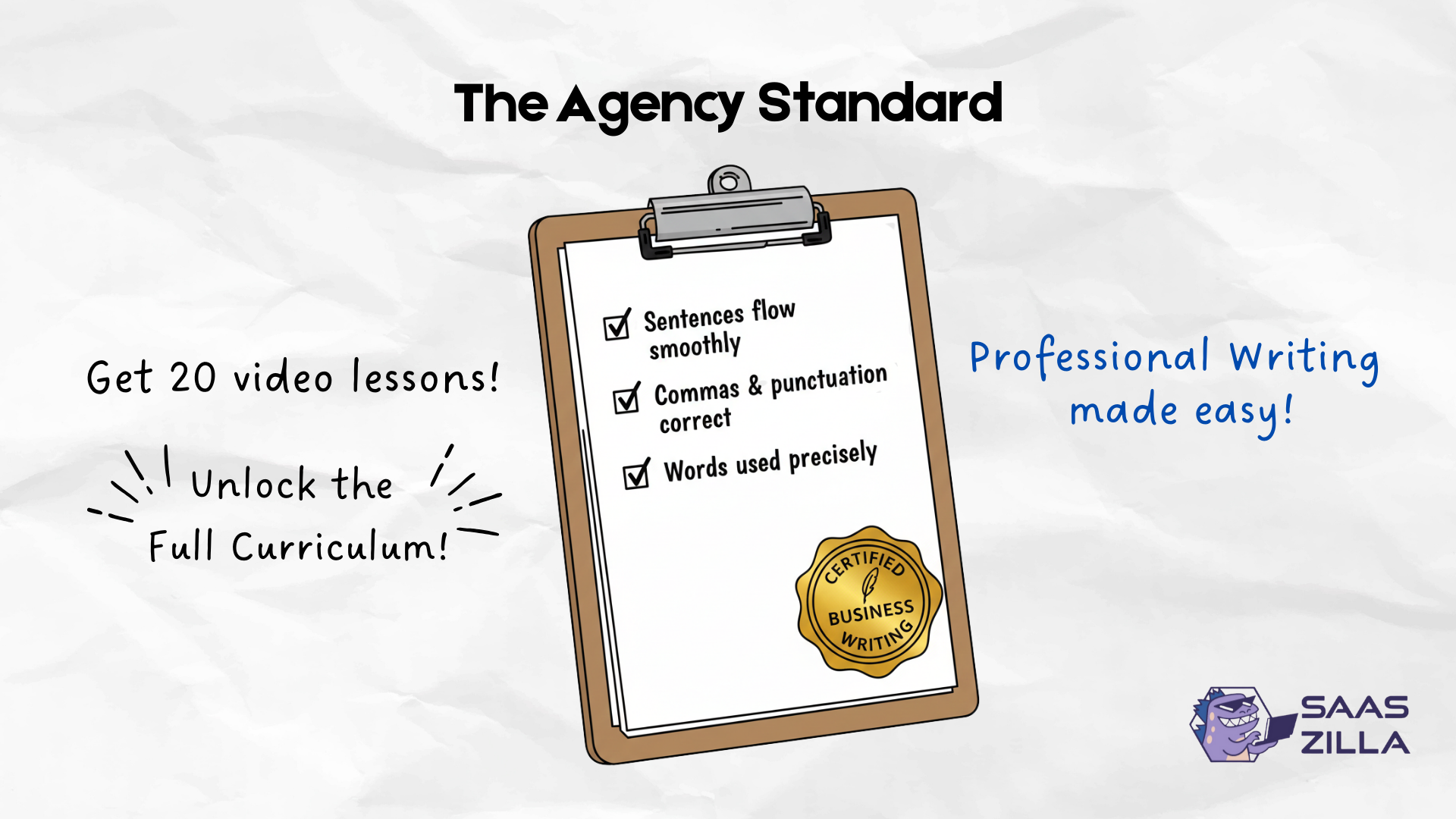
Module 1: Flow Control
The problem: Run-on sentences.
This is the #1 tell of amateur writing. The sentence that goes on and on and connects three ideas with “and” and never stops to breathe and makes your reader’s eyes glaze over.
The fix: Teaches the mechanics of sentence rhythm. When to stop. When to start. How to control the reader’s pace like a film editor controls a scene.
Module 2: The Punctuation Code
The problem: Commas, colons, semicolons, hyphens, quotation marks.
These aren’t decorations. They’re traffic signals.
A misplaced comma changes meaning. A missing hyphen creates confusion. A wrong quotation mark screams “I learned English from YouTube.”
The fix: This playbook covers every punctuation mark your business writing will ever need. Not the obscure rules. The ones that show up in proposals, emails, and contracts.
Including:
- Commas in a Series: The Oxford comma debate—settled.
- The Semicolon: How to use it without looking pretentious.
- Hyphens: When “small business owner” needs one (and when it doesn’t).
Module 3: Word Precision
The problem: The “tells.”
Affect vs. Effect. Their vs. There vs. They’re. Its vs. It’s. Complement vs. Compliment.
These errors don’t just look bad. They signal that the writer is either careless or non-native. Neither builds confidence.
The fix: This playbook helps to eliminate these mistakes permanently. Not through memorization—through understanding.
Your team will know the difference. Not guess at it.


Questions
There are no questions yet. Be the first to ask!